



Ketamine: A Comprehensive Guide by RozalosAngelescity.com
Ketamine is one of the most fascinating, widely studied, and debated substances in modern medicine. First synthesized in the early 1960s, it has been used for decades as an anesthetic, a battlefield medicine, a tool in veterinary care, and more recently, a breakthrough treatment for certain mental health conditions such as treatment-resistant depression and post-traumatic stress disorder (PTSD). Few drugs occupy a position so uniquely balanced between clinical necessity, public health controversy, and future promise.
At RozalosAngelescity.com, we are dedicated to providing clear, in-depth information about medical substances and their implications for health and society. This comprehensive guide explores ketamine from every angle — its history, mechanisms of action, medical and psychiatric uses, risks, legal status, and the future directions of ongoing research.
What is Ketamine?
Ketamine is classified as a dissociative anesthetic, meaning it produces a state of sedation and pain relief while also creating a sense of detachment from one’s body and surroundings. It belongs to the same family of compounds as phencyclidine (PCP), but was specifically developed to be safer and more predictable in medical settings. Unlike many anesthetics, ketamine does not typically depress breathing or blood pressure in dangerous ways, which makes it invaluable in emergency and battlefield medicine.
Why Ketamine Matters Today
Ketamine’s medical journey spans over half a century, and its relevance only continues to grow. While it remains an important anesthetic in surgery and trauma care, the most headline-grabbing development of the last two decades has been its emerging role in psychiatry. Low-dose Its infusions have shown rapid antidepressant effects in people who do not respond to standard treatments. This has fueled global interest in kets clinics, the development of esketamine (an FDA-approved nasal spray), and a surge of clinical research into its potential to reshape the treatment of mental health disorders.
Yet ketamine is not without its risks. It is also used recreationally, often illegally, where misuse can lead to dependency, bladder and urinary tract damage, and other health issues. The challenge for policymakers, medical providers, and society is balancing ket’s legitimate, even lifesaving, uses with the need to prevent misuse.
A Brief History of Keta
Discovery and Early Development
Ketamine was first synthesized in 1962 by Calvin Stevens, a chemist at Parke-Davis Laboratories. Researchers were looking for a safer alternative to PCP, which, although effective as an anesthetic, caused severe hallucinations and long-lasting psychological disturbances. After a series of animal and human trials, It was found to have a shorter duration of psychoactive effects while still providing reliable anesthesia.
By 1970, ketamine had received FDA approval in the United States as an anesthetic. Its ability to provide sedation without significantly suppressing breathing set it apart from many other anesthetic agents.
Ketamine in the Vietnam War
Real-world utility was proven during the Vietnam War, where it was widely used as a battlefield anesthetic. Injured soldiers could be stabilized quickly, even under chaotic conditions, because It could be administered intramuscularly or intravenously without the need for complex equipment. This legacy of battlefield use earned the nickname “the soldier’s anesthetic.”
Veterinary Medicine and Global Expansion
In addition to human medicine, It became widely used in veterinary care. Its reliability in sedating animals of different sizes and species made it an indispensable tool for veterinarians. Around the world, It became a staple anesthetic in both high-tech hospitals and low-resource clinics, especially in places where more expensive anesthetics were not available.
Rise of Recreational Use
By the late 1970s and 1980s, ketamine also began appearing outside of medical contexts. Recreational users sought its dissociative effects — feelings of detachment from reality, hallucinations, and what some describe as an “out-of-body” experience. In the rave and club scenes of the 1990s and 2000s, ketamine earned nicknames such as “Special K.”
This dual identity — as both a critical medical tool and a recreational drug of abuse — has shaped public perception of ketamine for decades.
Mechanism of Action: How Keta Works
To understand ketamine’s unique profile, it’s essential to look at how it works in the brain.
- NMDA Receptor Antagonism
Keta primarily acts as an antagonist of the N-methyl-D-aspartate (NMDA) receptor, a type of receptor involved in excitatory neurotransmission. By blocking these receptors, keta interrupts normal communication between neurons, leading to its anesthetic and dissociative effects. - Effects on Glutamate and Synaptic Plasticity
Beyond NMDA antagonism, IT indirectly increases the release of glutamate, the brain’s most common excitatory neurotransmitter. This leads to increased activity at AMPA receptors, which promotes synaptic plasticity — essentially the brain’s ability to rewire and form new connections. This mechanism is thought to underlie Its rapid antidepressant effects. - Other Neurochemical Effects
- Dopamine: boosts dopamine transmission, contributing to mood elevation.
- Opioid Receptors: Some studies suggest keta interacts with opioid receptors, which may explain its pain-relieving properties.
- Default Mode Network (DMN): disrupts activity in the DMN, a brain network associated with self-referential thinking. This disruption is linked to the dissociative, “ego-dissolving” experiences users report.
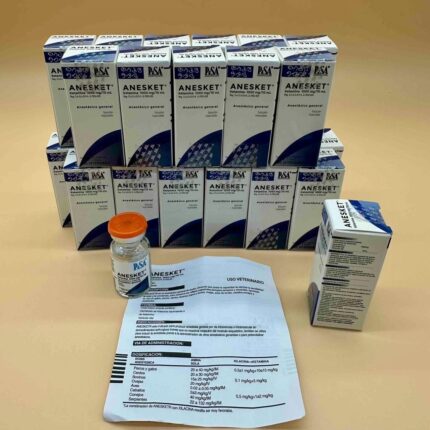
Together, these actions make ketamine not only an anesthetic but also a substance of growing interest in neuroscience and psychiatry. Shop with us at rozalosangelescity.com







 Edibles

Reviews
There are no reviews yet.